
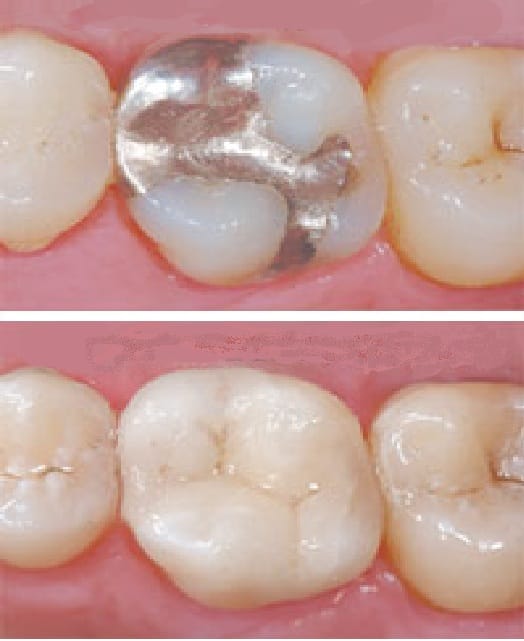
A filling repairs a tooth that’s been damaged by decay, cracks, or wear. We remove the weakened part, clean the tooth, and restore it with a strong, tooth‑coloured material that blends naturally with your smile.
Because decay doesn’t hurt at the start. Most cavities begin silently — no pain, no warning. By the time you feel something, the problem is already bigger.
A filling stops decay early, protects the tooth, and prevents the need for more complex treatment later.
Yes. Composite fillings bond securely to the tooth, require minimal drilling, and look completely natural. They’re strong, durable, and metal‑free.
They are also BPA free for those that are interested.
No. We numb the area gently, and the procedure is comfortable. We position your head and body so that you can be relaxed and distracted by the TV in the ceiling.
Usually 20–30 minutes, depending on the size and location. Most patients say the scale and clean takes longer than the filling. Though clearly bigger fillings take longer than small fillings.
If the tooth has lost too much structure, a crown or inlay/onlay is often the better long‑term option. We’ll always tell you honestly which option protects your tooth best.
You’re not alone — and you’re not judged. We see patients every week who haven’t been for a long time. Our job is to help you move forward, not look backward.
Now that you understand the essentials in a clear, conversational way, let’s explore the full, in‑depth guide for patients who want more detail.
A dental filling is a restoration used to repair a tooth affected by decay, cracks, or minor fractures. We remove the damaged area, clean the tooth, and place a strong, natural‑looking material to restore shape, strength, and function.
Very large cavities may be better restored with a crown, as it provides greater long‑term protection.
Composite fillings are the modern standard because they:
You may need a filling if you notice:
Early treatment prevents the need for more complex procedures. Children often need fillings because baby teeth are softer — regular visits to our Children’s Dentistry service help prevent future issues.
We choose modern tooth‑coloured composite fillings instead of traditional amalgam. Not because metal fillings are “toxic” that’s a common misconception, but because composite is:
Metal fillings have become unfashionable, and most patients prefer natural‑looking options.
Today’s dentistry uses two main tooth‑coloured materials: Composite Resin and Glass Ionomer. Each has its place, and we choose the right one based on what your tooth needs.
Composite Resin (Most Common Filling Material)
Composite resin is the material used for the majority of permanent fillings because it will:
Composite is the gold standard for most fillings because it restores strength and appearance at the same time.
Glass Ionomer (Used in Specific Situations)
Glass ionomer is an entirely different material with unique benefits. It can :
We use glass ionomer when:
Feature | Composite Resin | Glass Ionomer |
|---|---|---|
| Strength | High | Moderate |
| Aesthetics | Excellent (natural match) | Good |
| Fluoride Release | No | Yes |
| Best For | Permanent fillings | Kids, moist areas, temporary fillings |
| Bonding | Micromechanical + adhesive | Chemical |
| Longevity | Long‑lasting | Shorter lifespan |
| Tooth Removal Needed | Minimal | Minimal |
Is composite resin safe? Yes — it’s the global standard for modern dentistry and bonds securely to the tooth.
Is glass ionomer a permanent filling? It can be, but it’s usually used for children, high‑decay areas, or temporary restorations.
Which material lasts longer? Composite resin generally lasts longer than glass ionomer.
Does glass ionomer look natural? Yes — but composite resin offers the best aesthetic match.
Why would you choose glass ionomer instead of composite? When moisture control is difficult, or when fluoride release is beneficial.
No — the tooth is numbed, and the procedure is comfortable.
Composite fillings can last many years with good oral hygiene.
Yes — composite hardens immediately. Avoid very hard foods until numbness wears off.
Decay often causes no pain until it becomes severe. Early treatment prevents bigger problems.
We may recommend a crown or inlay/onlay for added strength.
A filling is one of the simplest, most effective ways to protect your tooth and prevent future problems. Our modern, tooth‑coloured materials blend seamlessly and keep your smile looking its best.
Book your consultation today and protect your smile with confidence.

Dental envy is a gentle, caring, and trustworthy family dental practice, which is experienced and affordable. we’ve been helping patients and their families with their dental health for over 15 years. give us a call today to book in for a check-up.